Selected work / Watling Community Association (registered charity, north London)
Watling Centre Space Hire
A venue-hire booking and billing platform for a north London community centre, replacing phone calls, spreadsheets and paper books with online booking, member pricing and card payments.
Close to 1,200 orders and around 970 accounts, with bookings, payments and refunds that no longer wait for the office to be open.
- ~1,200 Orders through the platform
- ~970 Hirer and member accounts
- ~30% More bookings in the first 18 months after launch
- 5 months From first conversations to the first version
At a glance
- Client
- Watling Community Association (registered charity, north London)
- Sector
- Venue hire · Community · Payments
- Period
- 2025–present
- Product
- Venue-hire booking, billing and operations platform
- Role
- Design and delivery lead · Ran design and the tech team end to end
- Team
- Rocketvan design + engineering, with the centre's office team, treasurer and members
- Duration
- First version in five months, updated September 2026
- Platforms
- Web app · Admin console
Confidentiality Shown with the charity's permission. Images are illustrative, with placeholder names and data; no real hirer details are shown.
What it was
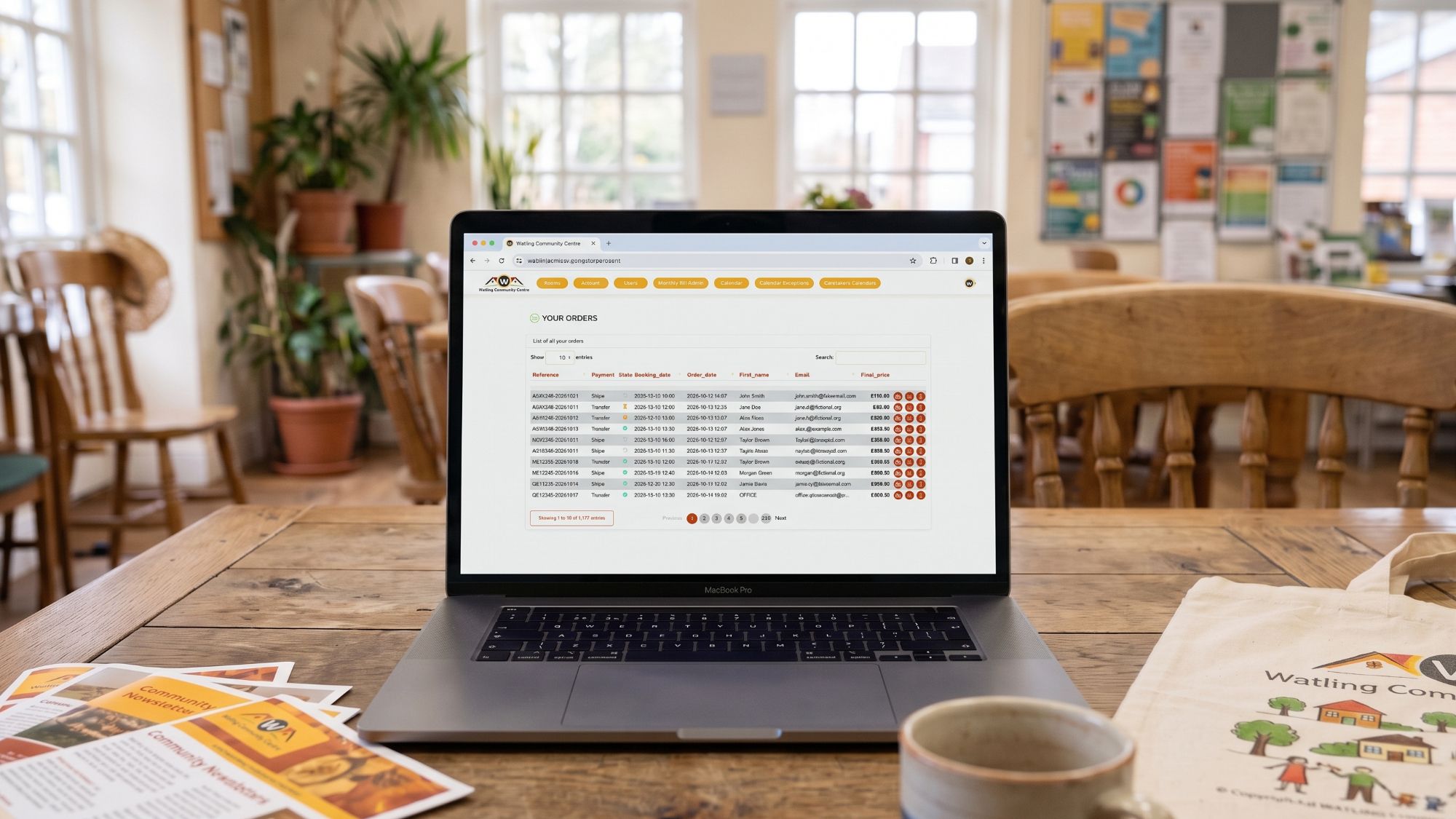
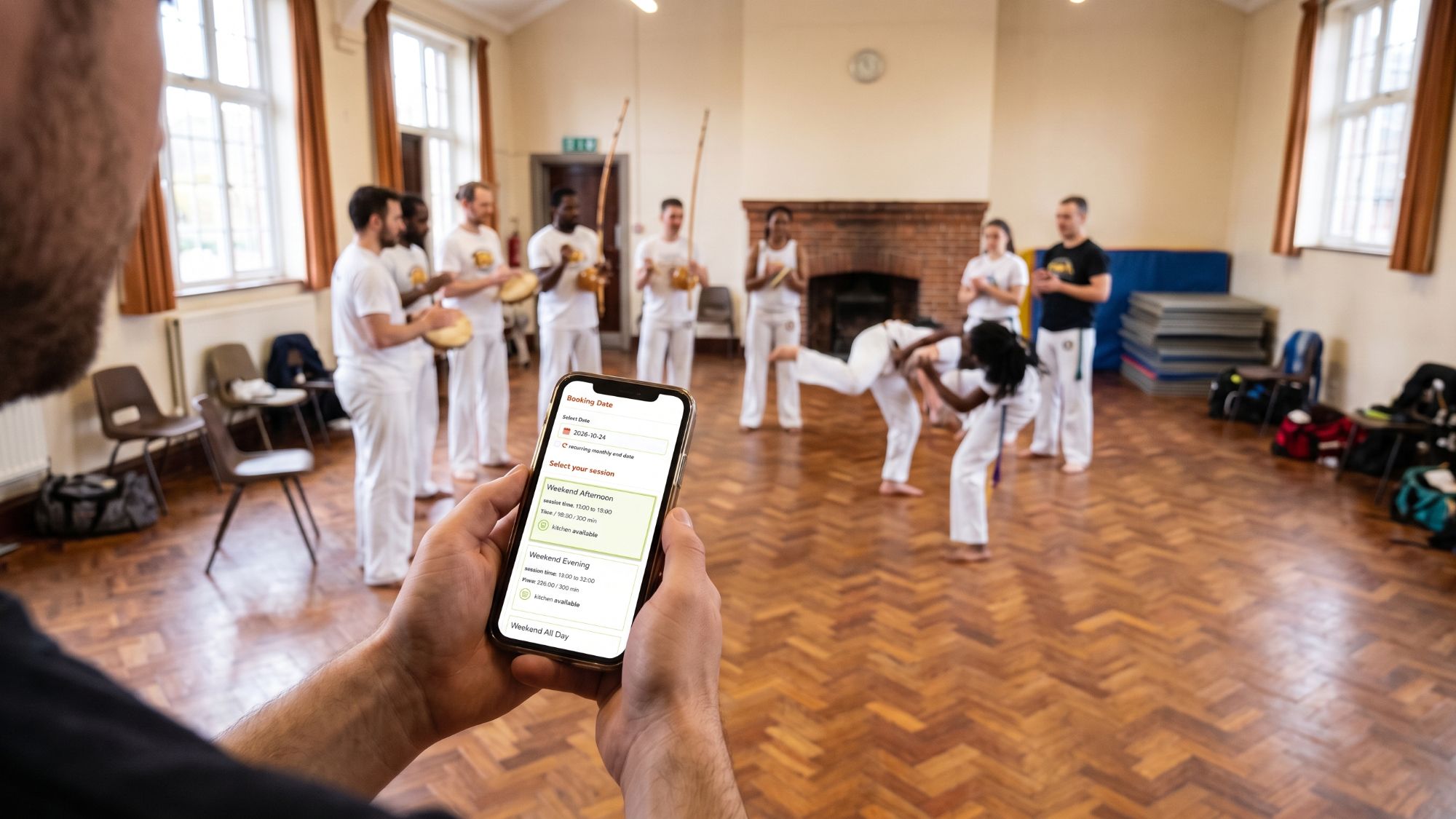
The Watling Centre is a community centre in north London, run by a small charity. It hires out halls, function rooms, kitchens and a garden to churches, day-care providers, community groups, classes and private parties. Until 2025 all of that was handled by phone, face to face and over email, then written into spreadsheets and physical booking books. We replaced it with a booking and billing platform the office runs every day, and hirers can book and pay without waiting for someone to pick up the phone.
The hard part
The rooms were the easy part. The pricing wasn’t. Members paid different rates depending on who they were and how they used the centre, private hirers paid something else, weekdays and weekends were priced differently, and a single slot was not the same as a block of group sessions. Some members also rent storage for their class gear, with separate cupboards for mats, instruments and clothes, billed alongside their room hire.
On top of that, the office is only open limited hours. Every question about price or availability that arrived out of hours waited until the next day, and some of those bookings went elsewhere.
What I did
I’m a trustee of the centre, and I led the project through Rocketvan, running both the design and our tech team. I spent time directly with the office team and with members to understand how bookings actually worked, not how they were meant to work. I also sat down with the treasurer and the admin side, because a booking system for a charity is just as much an accounting tool as a front door. The first version took five months. We’ve kept adding to it since, with the latest update in September 2026.
A few decisions worth calling out
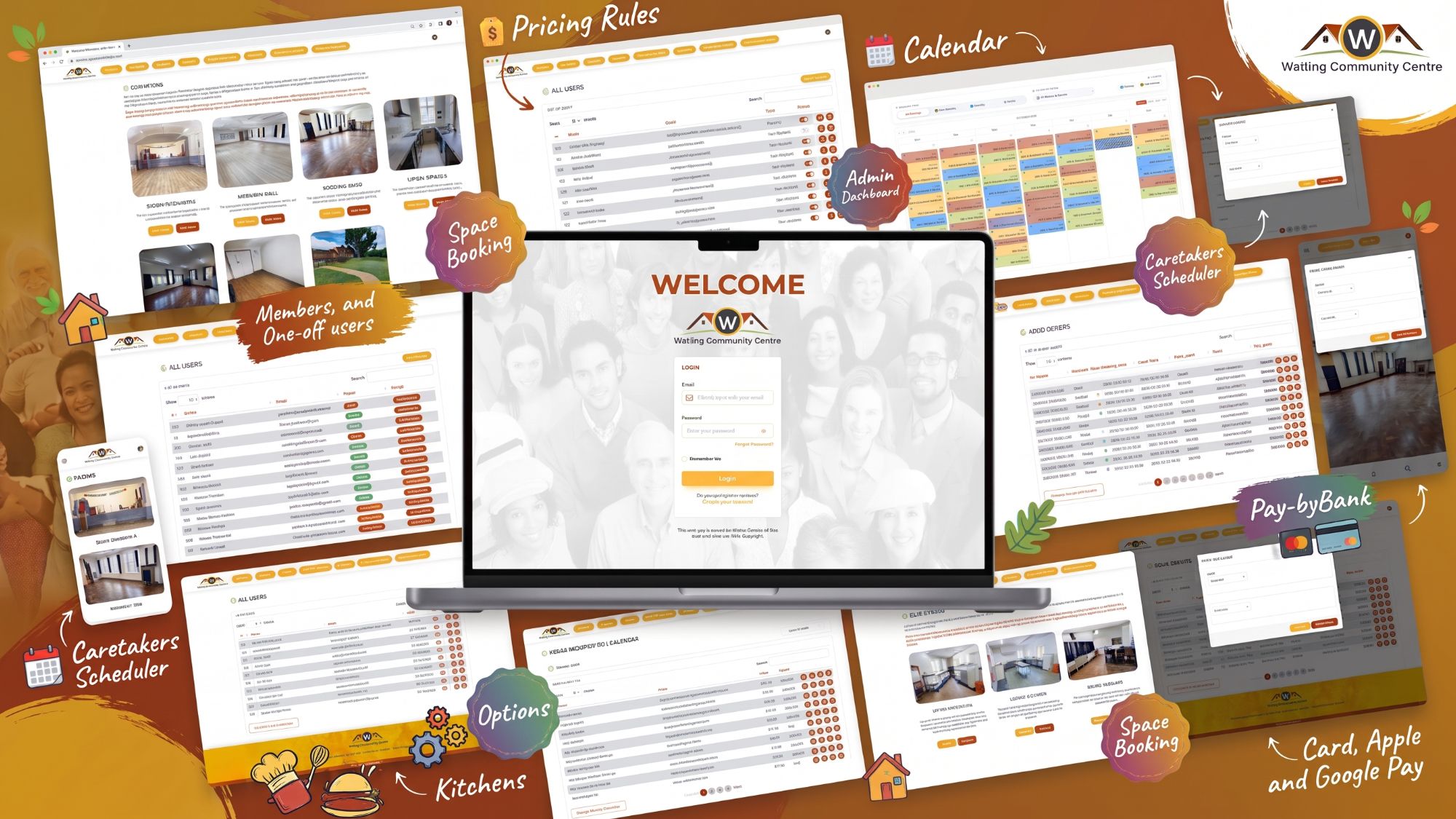
We wrote the pricing rules down before designing a screen. Member conditions, private rates, weekday and weekend pricing, single and group slots. Once the rules were agreed with the office and the treasurer, the interface could show a price without anyone having to phone and ask.
Regular hirers get a monthly bill, not a hundred receipts. A church that uses the same room every Sunday is billed once a month, with each session, the member discount and any storage on one invoice the treasurer can reconcile.
Deposits and refunds are part of the booking, not a side conversation. Kitchens carry their own deposit, rooms carry theirs, and the office can refund a deposit or cancel a booking from the order itself.
Card payments instead of cash and bank transfers. We brought in Stripe, so hirers can pay by card, Apple Pay, Google Pay or Pay by Bank, and the office can take and refund payments in minutes. Bank transfer is still there for the hirers who prefer it.
The caretakers are on the calendar too. A separate caretaker calendar tracks monthly and weekend hours, so the people who open and close the building see the same bookings as everyone else.
Where it landed
The centre now takes bookings and payments around the clock. There are close to 1,200 orders and around 970 accounts on the platform. Over its first year and a half, bookings went up by about 30%, by both the treasurer’s accounts and the platform’s own records, mostly because people can book when the office is closed. The office spends far less time answering price and availability questions. Nobody tracked that time before, so I can’t put a number on it, but it has gone back into the rest of running a busy community building.